
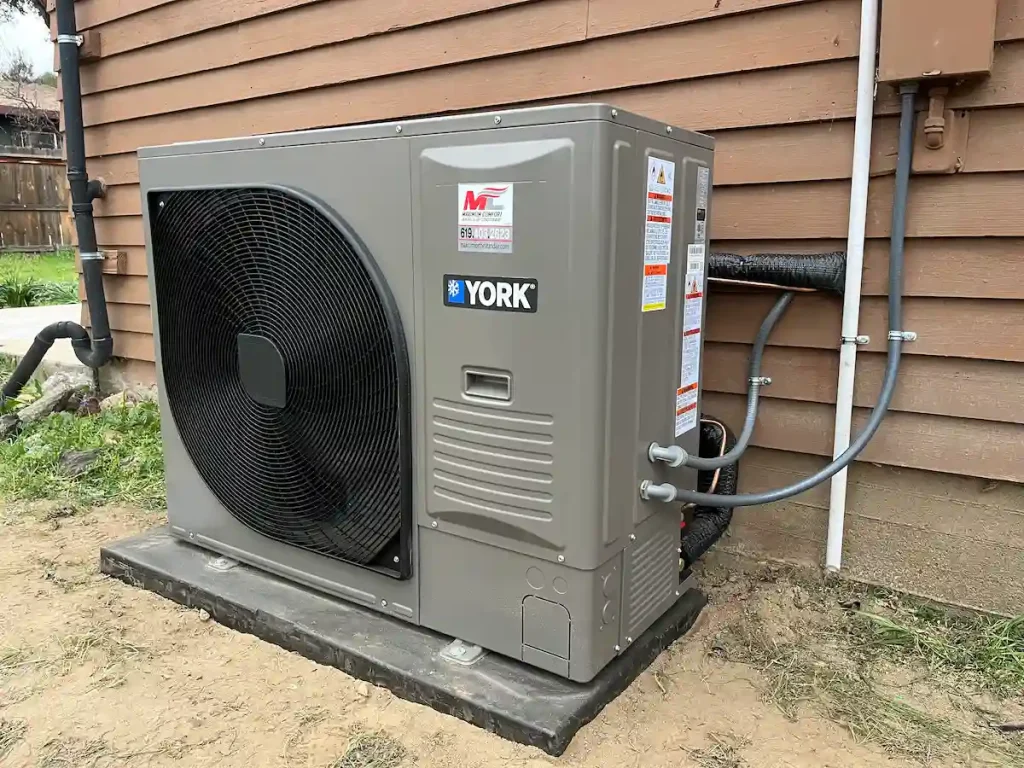
Modern York ductless mini split systems include built-in diagnostic technology that helps identify problems when something isn’t operating correctly. When the system detects an issue, it will display an error code on the indoor unit or remote controller. These codes act like a quick reference for technicians and homeowners, pointing to the area of the system that may be causing the problem.
Understanding what these codes mean can help you determine whether the issue is something simple—such as a dirty filter or power interruption—or something that requires professional HVAC service.
Below you’ll find a breakdown of the most common York ductless mini split error codes, along with a simple explanation of what each code means and the types of issues that typically trigger it. This guide is designed to help homeowners better understand their system and know when it may be time to troubleshoot or call for service.
Keep in mind that error codes can vary slightly depending on the model of your York mini split, but the codes listed below cover the most common situations technicians encounter in the field. If you have a question about a York mini split error code, give us a call today.
E-Series York Mini Split Error Codes (Indoor Code)
| Error Code | Details |
|---|---|
| E0 | Indoor EEPROM Error – The indoor unit control board memory is malfunctioning. Possible causes include control board failure, power surge damage, or wiring issues. This usually requires professional diagnosis. |
| E1 | Indoor / Outdoor Communication Error – The indoor and outdoor units cannot communicate properly. Common causes include loose communication wiring, faulty PCB boards, or power loss to the outdoor unit. |
| E3 | Indoor Fan Speed Malfunction – The indoor blower motor is not operating at the expected speed. This may be caused by a faulty blower motor, fan motor driver failure, or a control board problem. |
| E4 | Indoor Temperature Sensor Error – The room temperature sensor is not reading correctly. Possible causes include sensor failure, loose wiring, or a control board issue. |
| E5 | Evaporator Coil Sensor Error – The evaporator coil temperature sensor has failed or is sending incorrect readings. This sensor helps prevent the system from freezing. |
| EC | Refrigerant Leak Detection – The system has detected abnormal refrigerant pressure conditions. Possible causes include a refrigerant leak, blocked expansion device, or sensor failure. Professional service is usually required. |
| EE | Water Level Alarm – The indoor condensate pump or drainage system is not functioning properly. This may be caused by a clogged condensate drain line, failed pump, or triggered float switch. |
| E8 | Twin System Communication Error – Occurs in multi-zone or twin indoor unit configurations when indoor units fail to communicate properly. |
| E9 | Twin Model Malfunction – General malfunction related to multi-indoor unit configurations. |
F-Series York Mini Split Error Codes (Outdoor Code)
| Error Code | Details |
|---|---|
| F0 | System Overload Protection – The system detected abnormal operating conditions. Possible causes include high refrigerant pressure, blocked airflow, or a dirty outdoor condenser coil. |
| F1 | Outdoor Temperature Sensor Error – The outdoor ambient temperature sensor has failed or is sending incorrect readings. |
| F2 | Condenser Pipe Temperature Sensor Error – The sensor measuring refrigerant temperature in the condenser is malfunctioning or disconnected. |
| F3 | Discharge Temperature Sensor Error – The compressor discharge temperature sensor has detected abnormal temperatures or is malfunctioning. |
| F4 | Outdoor EEPROM Error – The outdoor unit control board memory is malfunctioning and may require replacement. |
| F5 | Outdoor Fan Motor Malfunction – The condenser fan is not operating correctly. Possible causes include a failed fan motor, capacitor failure, or a control board issue. |
| F6 | T2B Sensor Error – A temperature sensor inside the outdoor unit is malfunctioning or providing incorrect readings. |
| F7 | Auto Lifting Panel Communication Error – Occurs on cassette-style indoor units when the motorized panel cannot communicate with the system controls. |
| F8 | Auto Lifting Panel Malfunction – The automatic cassette panel mechanism is stuck or not operating properly. |
| F9 | Auto Lifting Panel Open – The system detects that the panel remains open when it should be closed. |
York Mini Split P-Series Protection Codes
| Error Code | Details |
|---|---|
| P0 | Inverter Module Protection – The inverter drive module detected abnormal electrical conditions and shut the system down to prevent damage. |
| P1 | High / Low Voltage Protection – Incoming electrical voltage is outside the safe operating range. Possible causes include electrical supply problems, utility voltage fluctuations, or wiring issues. |
| P2 | Compressor Overheat Protection – The compressor temperature exceeded safe limits. This may be caused by low refrigerant, a dirty condenser coil, or a failed fan motor. |
| P3 | Outdoor Low Temperature Protection – The system detected outdoor temperatures that are too low for normal operation. |
| P4 | Compressor Drive Error – The inverter drive is unable to properly operate the compressor. |
| P5 | Mode Conflict – Indoor units in a multi-zone system are requesting conflicting modes such as cooling and heating at the same time. |
| P6 | Low Pressure Protection – The system detected abnormally low refrigerant pressure. Possible causes include refrigerant leaks, restrictions in the refrigerant line, or faulty pressure sensors. |
| P7 | IGBT Sensor Error – The inverter transistor temperature sensor is malfunctioning or sending incorrect readings. |
York Mini Split Central Controller Fault Codes
These codes appear on centralized control systems used in commercial or multi-zone installations.
Common codes include:
| Error Code | Details |
|---|---|
| H1 | Network Communication Malfunction – The central controller cannot communicate properly with connected indoor or outdoor units. This is often caused by communication wiring problems or control board faults. |
| H2 | Outdoor Unit Decreasing Malfunction – The controller detected a problem while attempting to reduce capacity or remove an outdoor unit from operation in a multi-unit system. |
| H3 | Outdoor Unit Adding Malfunction – The controller detected a fault while attempting to add an outdoor unit into operation in a multi-system configuration. |
| EF | General System Fault – Indicates an unspecified malfunction detected by the central controller. Additional system diagnostics are usually required to determine the exact cause. |
| PF | System Protection Mode – The system has entered a protection state due to abnormal operating conditions such as electrical faults or system overload. |
When To Call a Professional HVAC Technician
While some issues such as power interruptions or clogged filters can be resolved quickly, most mini split error codes indicate electrical, sensor, or refrigerant problems.
You should call a professional HVAC technician if:
The error code returns after resetting the system
The system will not start
The unit repeatedly shuts down
The outdoor unit is not running
Ice forms on the indoor coil
Mini split systems rely on complex electronics and refrigerant controls, so proper diagnosis often requires specialized tools.
How To Prevent Mini Split Error Codes
Regular maintenance significantly reduces system errors.
Recommended maintenance includes:
Cleaning indoor air filters every 1–2 months
Washing the outdoor condenser coil annually
Checking refrigerant pressures
Inspecting electrical connections
Flushing condensate drain lines
Professional maintenance can help detect sensor problems or refrigerant leaks before they cause system shutdowns.
Got a York Mini Split Error Code? Call Us
If your York ductless mini split is displaying an error code or is no longer cooling or heating the way it should, a professional inspection can help identify the issue quickly and prevent further damage to the system.
While some problems may be caused by simple issues such as dirty air filters, power interruptions, or blocked airflow, many mini split error codes indicate deeper problems involving sensors, electrical components, refrigerant pressure, or communication between the indoor and outdoor units.
A trained HVAC technician can perform a full diagnostic evaluation to determine the exact cause of the fault. This typically includes testing temperature sensors, checking electrical connections, verifying refrigerant levels, and confirming that the indoor and outdoor units are communicating properly.
If your system continues displaying error codes or shuts down repeatedly, it may be time to schedule professional mini split repair service to prevent the issue from getting worse.
Regular maintenance can also help reduce the likelihood of system faults. Routine inspections allow technicians to clean coils, check refrigerant levels, test sensors, and ensure your system is operating efficiently. Many homeowners choose to enroll in an annual HVAC maintenance plan to keep their mini split system running reliably throughout the year.
Modern York ductless mini split systems include built-in diagnostic technology that helps identify problems when something isn’t operating correctly. When the system detects an issue, it will display an error code on the indoor unit or remote controller. These codes act like a quick reference for technicians and homeowners, pointing to the area of the system that may be causing the problem.
Understanding what these codes mean can help you determine whether the issue is something simple—such as a dirty filter or power interruption—or something that requires professional HVAC service.
Below you’ll find a breakdown of the most common York ductless mini split error codes, along with a simple explanation of what each code means and the types of issues that typically trigger it. This guide is designed to help homeowners better understand their system and know when it may be time to troubleshoot or call for service.
Keep in mind that error codes can vary slightly depending on the model of your York mini split, but the codes listed below cover the most common situations technicians encounter in the field. If you have a question about a York mini split error code, give us a call today.
E-Series York Mini Split Error Codes
| Error Code | Meaning | Possible Causes | What It Means |
|---|---|---|---|
| E0 | Indoor EEPROM Error | Control board failure, power surge damage, wiring issue | The indoor unit’s control board memory is malfunctioning. This usually requires professional diagnosis or board replacement. |
| E1 | Indoor / Outdoor Communication Error | Loose communication wiring, faulty PCB board, outdoor unit power loss | The indoor and outdoor units cannot communicate properly. This is one of the most common mini split faults. |
| E3 | Indoor Fan Speed Malfunction | Faulty blower motor, fan motor driver failure, control board problem | The indoor blower motor is not operating at the correct speed or responding to control signals. |
| E4 | Indoor Temperature Sensor Error | Sensor failure, loose wiring, control board issue | The room temperature sensor is malfunctioning or sending incorrect readings. |
| E5 | Evaporator Coil Sensor Error | Sensor failure, wiring problem, sensor misread | The evaporator coil temperature sensor is not functioning properly. This sensor helps prevent the system from freezing. |
| EC | Refrigerant Leak Detection | Refrigerant leak, blocked expansion device, sensor failure | The system has detected abnormal refrigerant pressure conditions and may shut down to prevent damage. |
| EE | Water Level Alarm | Clogged condensate drain line, failed pump, float switch triggered | The condensate drainage system is not working correctly, causing water to build up inside the indoor unit. |
| E8 | Twin System Communication Error | Indoor unit communication failure, wiring issue | Occurs in multi-zone or twin systems when indoor units fail to communicate properly. |
| E9 | Twin Model Malfunction | Multi-zone configuration fault | General malfunction related to twin or multi-indoor unit configurations. |
F-Series York Mini Split Error Codes
These errors typically originate from the outdoor unit.
| Error Code | Meaning | Possible Causes | What It Means |
|---|---|---|---|
| F0 | System Overload Protection | High refrigerant pressure, blocked airflow, dirty outdoor coil | The system has detected abnormal operating conditions and shut down to prevent damage. |
| F1 | Outdoor Temperature Sensor Error | Failed outdoor ambient sensor, wiring issue | The outdoor temperature sensor is not reading correctly or has failed. |
| F2 | Condenser Pipe Temperature Sensor Error | Sensor malfunction, wiring issue | The sensor monitoring refrigerant temperature in the condenser is malfunctioning. |
| F3 | Discharge Temperature Sensor Error | Sensor failure, overheating conditions | The compressor discharge temperature sensor has detected abnormal heat levels or is malfunctioning. |
| F4 | Outdoor EEPROM Error | Outdoor control board failure, memory fault | The outdoor unit control board memory is malfunctioning. |
| F5 | Outdoor Fan Motor Malfunction | Failed fan motor, capacitor failure, control board issue | The outdoor condenser fan is not operating properly or responding to control signals. |
| F6 | T2B Sensor Error | Sensor failure, wiring problem | A temperature sensor inside the outdoor unit is malfunctioning or providing incorrect readings. |
| F7 | Auto Lifting Panel Communication Error | Communication fault between panel and control board | Occurs on cassette-style indoor units when the motorized panel cannot communicate with the system controls. |
| F8 | Auto Lifting Panel Malfunction | Mechanical failure, stuck panel motor | The automatic panel mechanism is not operating correctly. |
| F9 | Auto Lifting Panel Open | Panel stuck open, panel sensor issue | The system detects that the cassette panel is open when it should be closed. |
P-Series York Mini Split Protection Codes
These are system protection codes, meaning the system shut itself down to prevent damage.
| Error Code | Meaning | Possible Causes | What It Means |
|---|---|---|---|
| P0 | Inverter Module Protection | Electrical fault, inverter module failure, power supply issue | The inverter drive module has detected abnormal electrical conditions and shut the system down to prevent damage. |
| P1 | High or Low Voltage Protection | Electrical supply problems, utility voltage fluctuations, wiring issues | Incoming voltage is outside the safe operating range for the system. |
| P2 | Compressor Overheat Protection | Low refrigerant, dirty condenser coil, failed fan motor | The compressor temperature has exceeded safe limits and the system shut down to prevent damage. |
| P3 | Outdoor Low Temperature Protection | Extremely low outdoor temperature | The system has detected outdoor temperatures that are too low for normal operation. |
| P4 | Compressor Drive Error | Inverter drive malfunction, control board issue | The inverter drive is unable to properly control or operate the compressor. |
| P5 | Mode Conflict | Indoor units set to conflicting modes | In multi-zone systems, indoor units are requesting different operating modes such as heating and cooling at the same time. |
| P6 | Low Pressure Protection | Refrigerant leak, restriction in refrigerant line, faulty pressure sensor | The system has detected abnormally low refrigerant pressure and shut down to prevent compressor damage. |
| P7 | IGBT Sensor Error | Inverter transistor temperature sensor failure | The sensor monitoring the inverter module temperature is malfunctioning or sending incorrect readings. |
York Mini Split Central Controller Fault Codes
These codes appear on centralized control systems used in commercial or multi-zone installations.
Common codes include:
| Code | Meaning |
|---|---|
| H1 | Network communication error |
| H2 | Outdoor unit decreasing malfunction |
| H3 | Outdoor unit adding malfunction |
| EF | General system fault |
| PF | System protection |
When To Call a Professional HVAC Technician
While some issues such as power interruptions or clogged filters can be resolved quickly, most mini split error codes indicate electrical, sensor, or refrigerant problems.
You should call a professional HVAC technician if:
The error code returns after resetting the system
The system will not start
The unit repeatedly shuts down
The outdoor unit is not running
Ice forms on the indoor coil
Mini split systems rely on complex electronics and refrigerant controls, so proper diagnosis often requires specialized tools.
How To Prevent Mini Split Error Codes
Regular maintenance significantly reduces system errors.
Recommended maintenance includes:
Cleaning indoor air filters every 1–2 months
Washing the outdoor condenser coil annually
Checking refrigerant pressures
Inspecting electrical connections
Flushing condensate drain lines
Professional maintenance can help detect sensor problems or refrigerant leaks before they cause system shutdowns.
Got a York Mini Split Error Code? Call Us
If your York ductless mini split is displaying an error code or is no longer cooling or heating the way it should, a professional inspection can help identify the issue quickly and prevent further damage to the system.
While some problems may be caused by simple issues such as dirty air filters, power interruptions, or blocked airflow, many mini split error codes indicate deeper problems involving sensors, electrical components, refrigerant pressure, or communication between the indoor and outdoor units.
A trained HVAC technician can perform a full diagnostic evaluation to determine the exact cause of the fault. This typically includes testing temperature sensors, checking electrical connections, verifying refrigerant levels, and confirming that the indoor and outdoor units are communicating properly.
If your system continues displaying error codes or shuts down repeatedly, it may be time to schedule professional mini split repair service to prevent the issue from getting worse.
Regular maintenance can also help reduce the likelihood of system faults. Routine inspections allow technicians to clean coils, check refrigerant levels, test sensors, and ensure your system is operating efficiently. Many homeowners choose to enroll in an annual HVAC maintenance plan to keep their mini split system running reliably throughout the year.